

The Surprisingly Prevalent Issue of Leprosy
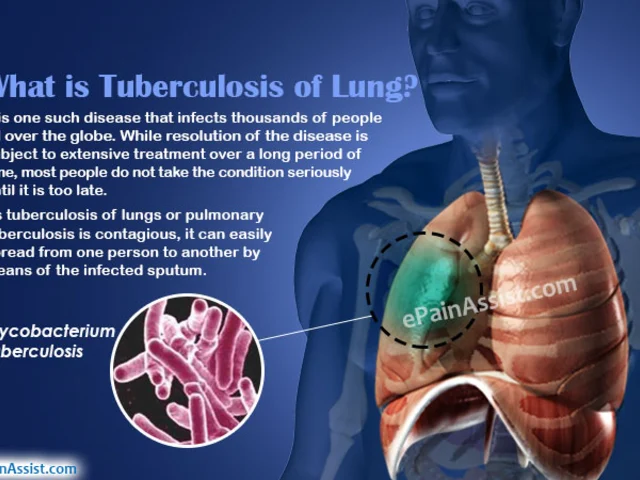
Let's dive right into it, shall we? Many of us, after hearing the term ‘leprosy’, might automatically think this is a disease of the past. Yet, you'd be surprised to learn that this bacterial infection is still a prevalent global health issue today. Now, I know what you're thinking. "Oliver, are you sure? I thought leprosy was a thing of the Bible." Well, that's not exactly the case. According to World Health Organization statistics (yes, I zoomed in on my browser to read those tiny numbers), there were nearly 202,000 new cases of leprosy recorded worldwide in 2020. And yes, you read that right. That's a number with five zeros. Let's take a moment to digest that
The Intersection of Leprosy and Human Rights
Now, onto the meat and potatoes. The reason you're here. It's time to talk about leprosy and human rights. You're probably wondering, "what does a disease have to do with human rights?" Well, quite a bit, as it turns out. One need not look further than the societal and systemic issues surrounding the disease.
Many individuals living with leprosy face discrimination and stigmatization. Why? Mainly due to damaging misconceptions about this misunderstood disease. These misconceptions often lead to societal isolation, prejudice, and unfortunately even more. But we are not here to just dwell on the problem, friends. I strongly believe in the proactive approach. Time to put on our advocacy hats (mine is a worn-out baseball cap, by the way).
Advocating for Equality and Dignity in Leprosy Care
At this point, you might be asking, "Oliver, what can we do here?" Well, the answer is: quite a lot. We have to tackle the issue of leprosy with a two-pronged approach. First, raise awareness about the actual nature of the disease, and second, advocate for policies that protect the rights of those affected by it.
The first step is educating ourselves and others about leprosy. The disease is not highly contagious and is curable with appropriate medical treatment. And can anyone tell me what weapon we can use against ignorance? That's right, Knowledge! I give you a virtual high five for that.
On the second front, we need to champion policies aimed at supporting individuals living with leprosy and minimizing their societal obstacles. This could range from fighting against discriminatory practices to ensuring equal access to medical treatment. The policies must uphold the principles of dignity, fairness, and equality: concepts that, honestly, should apply universally.
Real-Life Stories: Putting Faces to the Issue
Let me tell a story. Well, not from my life, but it's a powerful one nonetheless. There's this inspiring lady named Sakshi who lives in India, a country with one of the highest rates of leprosy. After being diagnosed with the disease, Sakshi faced severe discrimination from her community. However, Sakshi didn't let these challenges defeat her. Instead, she became a fierce advocate for people living with leprosy
She worked tirelessly to dismantle misconceptions about the disease, leading awareness campaigns, engaging with policymakers, and becoming a beacon of hope for many in her community. These moments represent the magnitude of what advocacy can accomplish when it aligns with human rights, and it's something I hope we can all be inspired by.
Moving to a lighter note (because well, it's me), my domestic cat Felix just walked across my keyboard, perhaps a sign for me to wrap up? Or just after his midnight snacks? Who knows. But let's wrap this up anyway
To conclude, leprosy is not a disease of the past - it is a present-day issue interweaved with deeply ingrained social and systemic injustices. However, with advocacy and a commitment to upholding human rights, we can combat these issues. Let's remember, it's all about extending a helping hand and showing empathy towards those affected by leprosy; and that's exactly what we should do: Advocate for dignity, fairness, and equality.
And on this note, it’s time to take Max, my ever so hyper border collie for his midnight stroll. Let’s keep this conversation going and make a real difference. Stay informed, stay compassionate. Evangelizing Oscar and getting him to make posters about leprosy for school tomorrow. Wish me luck!
17 Comments
Interesting post. I’ve worked with leprosy-affected communities in rural India for over a decade. The stigma isn’t just social-it’s institutional. Many clinics still have separate waiting rooms, and schools refuse enrollment without a ‘clean bill’-even after treatment. Awareness campaigns need to target bureaucrats, not just the public.
How utterly *quaint* of you to frame this as a ‘human rights’ issue-as if leprosy weren’t a predictable consequence of systemic poverty and poor sanitation. The WHO’s own data shows 80% of cases occur in regions with substandard infrastructure. We’re not talking about discrimination-we’re talking about failed development policy. And yet, you’re here waxing poetic about Sakshi’s ‘beacon of hope.’ How performative.
Let’s not confuse moral posturing with structural intervention. A $200,000 MDT supply chain is worth more than ten TED Talks.
Stigma = lazy biology + religious guilt. 🤡
Wow. Another ‘compassionate’ white guy with a cat named Felix telling us how to fix the world. 😒 I mean, really? You think posting about leprosy makes you woke? Get a real job. Or at least stop using ‘advocate’ like it’s a personality trait.
Also, your cat walked on your keyboard. That’s the only real truth here.
Okay so let me get this straight you wrote a 1000 word essay about leprosy and ended it with a border collie named Max and a cat named Felix and then mentioned some kid named Oscar who’s making posters for school like this is a middle school PTA meeting??
Look I get it you want to seem relatable but you’re not a dad blog you’re writing about systemic human rights violations and you’re trying to end it with ‘wish me luck’ like you’re asking for help with a science fair project
Also Felix is not a sign from the universe he’s a cat who likes tuna
There’s a quiet dignity in how communities in Kerala and Odisha have quietly redefined ‘recovery’-not just as medical cure, but as social reintegration. The real tragedy isn’t the disease, but the erasure of their narratives by global health frameworks that reduce them to statistics. We need ethnographic listening, not just policy papers.
And yes, Felix is probably the most honest participant in this thread.
Thank you for highlighting Sakshi’s story. I’ve met women like her in Nepal-women who, despite being ostracized, became community health educators. Their leadership is the most effective tool we have. But we must fund their work directly, not through intermediaries. Grassroots advocacy isn’t a side note-it’s the core.
lol leprosy is still a thing?? i thought it was like the plague or something from the middle ages
also oscar making posters?? cute but what does this have to do with anything
While the emotional appeal of personal narratives is compelling, the data remains paramount. According to the 2021 Global Leprosy Report, 70% of new cases occur in India, Brazil, and Indonesia. Yet funding for stigma-reduction programs constitutes less than 3% of total leprosy budgets. This misalignment must be addressed through evidence-based policy reallocation, not anecdotal inspiration.
Oh great. Another performative ally with a blog and a cat. You think writing about leprosy makes you morally superior? Newsflash: you’re not saving anyone. You’re just using suffering as content. The real problem? People like you who think a hashtag and a heartfelt paragraph fix centuries of systemic neglect.
Go volunteer. Don’t just write about it.
My cousin got diagnosed in 2018. Treated in 6 months. No one knew until she told them. Then everyone acted like she had the plague. It’s not the disease. It’s the fear.
Exactly. And that fear is reinforced by outdated medical signage in public clinics-yellow hazard tapes, isolation rooms labeled ‘Leprosy Ward.’ These aren’t relics-they’re active tools of exclusion. We need to redesign healthcare spaces to normalize treatment, not stigmatize it.
Back in Galway back in the 80s there was a fella lived near the cliffs they called him The Leper and no one would speak to him even though he was cured since 1962. People just forgot. They never forgot the label. That’s the real disease right there.
And now we got TikTok activists who think posting a video with #EndLeprosyStigma is activism. Nah. It’s digital noise. Real change happens when someone knocks on a door and says ‘I’m here to help’ not ‘I’m here to post’
Knowledge is power but access is justice. MDT is free but transport to clinics isn’t. That’s the real barrier. Not ignorance. Logistics.
What if the real ‘cure’ isn’t medicine but redefining what ‘normal’ means? We don’t need to ‘fix’ people with leprosy. We need to fix how we see them.
My uncle had it in the 70s. Got cured. Still got called ‘leper’ at the grocery store. He stopped going out. That’s the real cost. Not the blisters. The silence.
Just finished a documentary on this in rural Uganda. The women who survived? They started a cooperative. Made soap from local plants. Sold it. Rebuilt their lives. No NGO. Just each other. Maybe the real advocacy isn’t in policy-it’s in people choosing to see each other as human. Again. Again. Again.